The TUI
Run flow tui to open a tabbed full-screen app. On an interactive terminal,
running flow on its own does the same thing.
The tabs
Section titled “The tabs”- New - You can describe a flow and generate it with a model you pick.
The live token tail streams as it drafts. You can also load an existing
.flowby path or pasted DSL. The proposed graph renders as a node tree with a one-paragraph plan. From there you can apply it to run it in the monitor, or save it as a template. An autonomous toggle hands the whole generate → run → re-plan loop to the engine. - Templates - This tab has a templates table, a template detail that shows the flow graph as an indented tree labeled by node kind, and a live run monitor.
- History - This tab has a runs table and a per-run detail with node outputs.
The run monitor
Section titled “The run monitor”The monitor shows a progress bar, the graph as a status-colored tree with
per-node durations, and a timestamped event log. flow run --tui <target> jumps
straight into the monitor for a single run. On an interactive terminal, flow run on its own opens it automatically. To stay headless, pass --no-tui,
--json, or pipe the output.
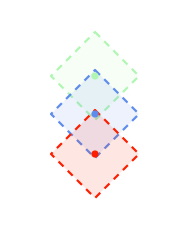
Everything renders in the Flow brand motif. Diamonds are nodes, joined by tree connectors and colored by status.
| Glyph | State | Color |
|---|---|---|
◇ | pending / skipped | dim |
◈ | running | blue |
◆ | succeeded | green |
◆ | failed | red |
LLM tokens stream live into the TUI during AI node execution.
| Key | Action |
|---|---|
↑↓ / jk | Move |
enter | Run / open |
p / r | Pause / resume |
c / x | Cancel |
n / h | New tab / History tab |
esc / q | Back / quit |
The New tab has its own keys. Type to describe the flow, then use g to
generate, m to cycle the model, A to toggle autonomous, l to switch
between describe and load, a to apply and run, and s to save as a template.
The terminal is restored on exit and on panic.
Related
Section titled “Related”- Commands
- Agentic and autonomous runs is the same loop, on the canvas.